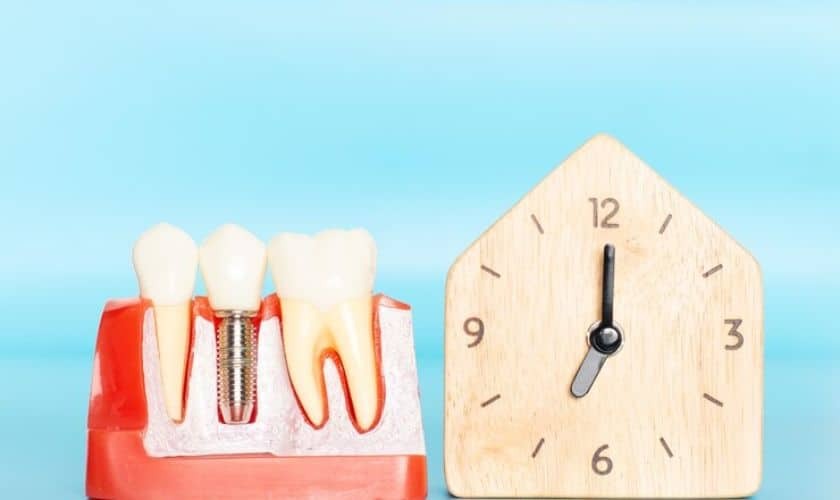
Have you ever thought about how much a missing tooth impacts your daily life? If you’re one of the over 150 million Americans with missing teeth, you know the struggle: maybe you’re avoiding your favourite foods, or perhaps you feel less confident when you smile. You’re not alone, and there’s a permanent solution that’s growing in popularity across the United States: dental implants.
With approximately 3 million Americans already benefiting from them, and an overall success rate reported to be as high as 98% in scientific literature, dental implants are a highly reliable and enduring option for tooth replacement (Journal of Oral Implantology, Impressions Dental).
But what does the journey actually look like? Getting an implant is a multi-stage process, and understanding what happens before, during, and after the surgery is the best way to ensure your treatment goes smoothly.
Before Your Implants: The Planning and Preparation Phase
This initial stage is arguably the most critical for long-term success. It’s all about meticulous planning.
Consultation and Assessment
Your qualified dentist in Puyallup will conduct a comprehensive evaluation. This includes:
- 3D Imaging: Advanced X-rays and 3D CT scans are used to precisely map your jawbone, nerve locations, and sinus cavities. This determines if your jawbone has enough mass and density to support the implant.
- Medical Review: They will review your medical history, as certain conditions like uncontrolled diabetes or heavy smoking can increase the risk of implant failure. One prospective clinical study, for example, noted a failure rate of 29% in patients with diabetes versus a lower rate in other groups over an 8-10 year follow-up period.
Preparation Procedures (If Needed)
If your jawbone is not thick enough or if a tooth needs to be removed, preparatory surgeries may be required.
- Bone Grafting: If insufficient bone is present, a bone graft is performed to build a solid foundation. In a large-scale data analysis, procedures involving bone grafting showed higher, though still low, failure rates compared to cases without. This procedure extends the timeline but is essential for stability.
- Tooth Extraction: Any damaged or decayed tooth must be removed before the implant process begins.
During Your Implants: The Surgical Placement
The actual implant placement is a surgical procedure, typically performed in an outpatient setting.
The Procedure
- Anaesthesia: Local anaesthesia is used to completely numb the area, ensuring you do not feel pain. Sedation options are often available for patient comfort. A high percentage of patients report the level of immediate post-operative pain to be acceptable.
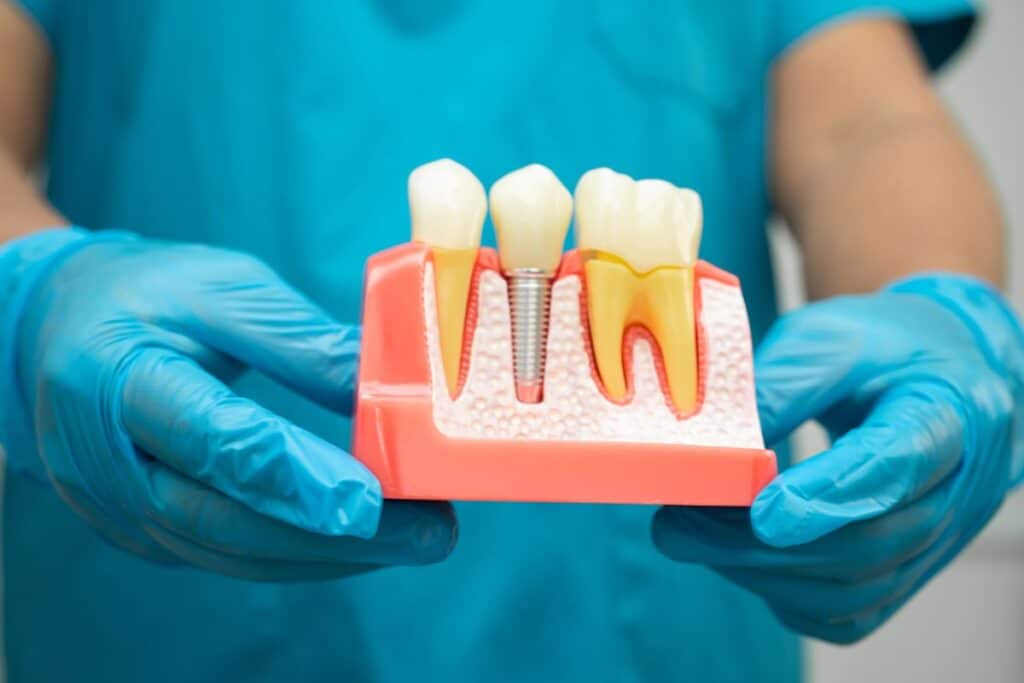
- Implant Insertion: A small incision is made in the gum to expose the jawbone. A precise hole is drilled, and the titanium post (the “root” replacement) is carefully inserted into the bone. Titanium is used because of its proven ability to fuse with bone, a process called osseointegration.
- Suturing: The gum tissue is closed with stitches. A temporary crown or denture may be placed, particularly for implants in the front of the mouth.
The procedure itself can often be completed in about one to two hours per implant site.
After Your Implants: Healing, Restoration, and Long-Term Care
This is the longest phase, essential for the implant’s durability.
Osseointegration and Initial Healing
- Timeline: The critical healing phase, where the implant fuses with your jawbone (osseointegration), can take anywhere from three to nine months. This fusion is what gives the implant its incredible stability.
- Immediate Post-Op (First 48 Hours): Expect minor swelling and slight bleeding. Swelling typically peaks around 48 hours and then begins to subside. You’ll be instructed to use ice packs and stick to soft foods (like yoghurt or mashed potatoes).
- Recovery: For the first week, sticking strictly to your post-operative instructions—including prescribed medications and avoiding strenuous activity and smoking—is vital. Smoking, in particular, is a significant risk factor that can interfere with healing and increase the risk of implant failure.
Abutment and Crown Placement
- Final Stage: Once osseointegration is complete, a minor procedure is performed to attach the abutment (a small connector piece) to the implant post.
- Restoration: Your custom-made crown (the visible, artificial tooth) is then secured to the abutment. This final crown placement usually takes about an hour.
Long-Term Success and Patient Satisfaction
Dental implants in Puyallup are designed to be a permanent tooth replacement.
- Longevity: Research indicates that the long-term survival rate for implants remains high, often exceeding 90% even after 10 years and showing a remarkable 4 out of 5 implants success rate after 20 years in a meta-analysis.
- Quality of Life: The vast majority of patients report high satisfaction. Studies show that approximately 90% of patients report high satisfaction with their implants, and most report a substantial improvement in their quality of life, including chewing function and self-esteem, compared to traditional dentures.
Frequently Asked Questions (FAQs)
Q: Are dental implants painful?
A: You should not feel any pain during the surgery itself due to local anaesthesia and/or sedation. Post-surgery, it is normal to experience some discomfort and swelling for a few days, which is typically managed effectively with over-the-counter or prescribed pain medication.
Q: How long does the entire dental implant process take?
A: The full process, from initial consultation to receiving the final crown, can take anywhere from 3 to 9 months, or sometimes longer if you require preliminary procedures like bone grafting. The longest phase is the osseointegration period, where the jawbone fuses with the implant.
Q: What is the risk of implant failure?
A: The average failure rate for dental implants is very low, often cited as around 3.1% worldwide and slightly higher in the U.S. at about 6%. The risk of failure is higher for smokers and those with certain systemic health issues. The highest incidence of failure typically occurs within the first year post-implantation.
Q: Do dental implants require special care?
A: Implants should be treated just like natural teeth. Excellent oral hygiene is crucial: regular brushing, flossing (with a specialised floss recommended for implants), and routine check-ups with your dentist are necessary to maintain their longevity and prevent a complication called peri-implantitis.
Q: How long can I expect my dental implant to last?
A: With proper care and maintenance, a dental implant can last a lifetime. The implant post itself is a permanent replacement for the tooth root. The attached crown may occasionally need to be replaced after 10 to 15 years due to normal wear, but the implant foundation should remain stable.