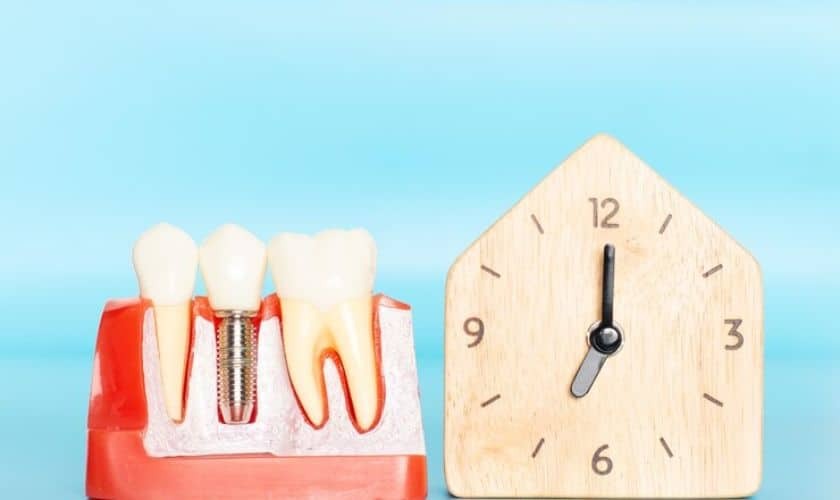
It’s every parent’s nightmare: a tumble on the playground, a stray baseball, or a bicycle wipeout that results in a missing permanent tooth. Your first instinct is likely to fix it as quickly as possible to restore your child’s confident smile. You’ve probably heard that dental implants are the “gold standard” for tooth replacement, but here is the big question: Is your child actually ready for one?
While we often think of dental implants as a quick fix for adults, the timeline for kids is a lot more complex. In this guide, we’re diving into the data, the biological “growth spurts,” and the expert recommendations to help you understand exactly when—and why—your child should (or shouldn’t) get a dental implant.
Why Age 18 is the Magic Number
In the United States, the American Academy of Pediatric Dentistry (AAPD) and the American Association of Oral and Maxillofacial Surgeons (AAOMS) generally agree that dental implants should not be placed until skeletal growth is complete.
For most children, this doesn’t happen until their late teens. The “magic number” usually falls around:
- Females: 15 to 17 years old
- Males: 17 to 21 years old
Why the difference? Statistically, girls reach skeletal maturity earlier than boys. According to clinical data, placing an implant before these ages carries a high risk of failure because a dental implant, unlike a natural tooth, is ankylosed. This means it is fused directly to the bone and will not move as the rest of the jaw grows.
The Statistics of Success and Risk
Recent studies highlight a significant age-based gap in success rates. Data from the National Institutes of Health (NIH) suggests:
- Adult Success Rate: ~97.4%
- Adolescent Success Rate (Ages 15-19): ~93%
- Child Success Rate (Under 13): ~72.4%
The lower success rate in younger children is primarily due to infraocclusion. As the jaw continues to grow vertically, the natural teeth “erupt” or move upward, but the implant stays stuck in the bone. This results in the implant appearing to “sink” into the gum line, leading to functional issues and a very noticeable aesthetic gap.
What Happens if You Get an Implant Too Early?
If a surgeon were to place an implant in a 12-year-old, the results could be devastating by age 18. Because the jaw expands and shifts during puberty, the following complications are common:
- Misalignment: The implant remains stationary while the rest of the teeth shift, resulting in a “crooked” appearance.
- Bone Loss: Research shows that implants placed during active growth can interfere with the natural development of the alveolar ridge (the bone that supports teeth).
- Prosthetic Failure: The crown attached to the implant may eventually need to be replaced multiple times to keep up with the changing height of the surrounding teeth, leading to increased costs and trauma.
Special Circumstances: When Early is Necessary
While the “wait until 18” rule is the standard, there are rare medical exceptions. For children suffering from Ectodermal Dysplasia (a genetic condition where multiple teeth never form) or severe facial trauma, doctors may recommend early intervention.
In these cases, implants are sometimes placed as early as age 5 or 6, but only in the anterior mandible (front of the lower jaw). Statistics show that this specific area of the jaw completes the majority of its growth very early in life. However, parents must be prepared for the fact that these implants will likely need to be revised or replaced as the child enters adulthood.
Why It’s Usually Best to Wait
Jaw Growth Is Unpredictable
Every child is unique. Two teens of the same age may have very different levels of dental maturity.
That’s why dentists often use tools like:
- Growth X-rays
- Cephalometric radiographs
- Hand–wrist bone assessments
to gauge whether the jaw has stopped growing before suggesting implants.
Dental Implants Are Meant to Stay Put
Once an implant integrates with bone, it becomes static. Natural teeth, on the other hand, can continue to erupt and shift as growth continues. Implants that don’t shift can lead to alignment issues — even if they never “fail” medically.
Temporary Options Until Your Child Is Ready
Just because an implant isn’t recommended yet doesn’t mean you have to accept a gap in your child’s smile. There are excellent interim solutions:
- Removable partial dentures
- Space maintainers
- Bonded bridges
- Orthodontic appliances
These options help preserve space, protect oral health, and maintain aesthetics until your child’s jaw is ready for implants.
Practical Steps for Parents
Here’s a simple roadmap you can follow:
- Talk to a Pediatric Dentist Early: Even if the implant is years away, early evaluation helps plan the best approach.
- Monitor Growth Progress: A qualified dentist in Puyallup may recommend periodic imaging to track jaw development.
- Focus on Healthy Oral Habits: Good hygiene and regular cleanings improve implant outcomes whenever the time is right.
- Plan for a Timeline Based on Individual Growth: Don’t assume age alone tells the whole story — skeletal maturity matters most.
Conclusion
Navigating your child’s dental health can feel like a marathon, not a sprint. While the 97% success rate of adult implants is tempting, the data clearly show that patience is the best medicine. Waiting until the jaw has fully matured—typically 16 for girls and 18-21 for boys ensures that the implant remains a permanent, beautiful part of their smile for a lifetime.
If your child has lost a tooth, your next best step is to consult a pediatric dentist in Puyallup, who can assess their “skeletal age” using X-rays of the wrist or jaw to determine exactly when they’ll be ready.
Frequently Asked Questions
How can a dentist tell if my child’s jaw has stopped growing?
Dentists use a combination of methods, including serial cephalometric X-rays (comparing head X-rays taken a year apart) and, occasionally, “hand-wrist” X-rays to assess bone maturity. If there is no change in growth over a 12-month period, the child is likely ready.
Can my 13-year-old get an implant if they are very tall for their age?
Height isn’t always a perfect indicator of jaw maturity. Even if a child has finished their “height” growth spurt, the jawbone (especially the maxilla) can continue to undergo subtle changes into the late teens.
Are dental implants for kids covered by insurance?
Most dental insurance plans consider implants a “major” procedure and may have age restrictions or “waiting period” clauses. It is vital to check if your policy covers “congenitally missing teeth” versus “accidental trauma.”
What is the most common reason kids need implants?
Statistically, dental trauma (sports injuries and falls) accounts for about 73% of tooth loss in children, followed by congenital hypodontia (teeth that never grew in) at roughly 18%.
Is the procedure for a teenager different from that for an adult?
The surgical procedure is nearly identical, involving the placement of a titanium post into the bone. The main difference is the planning phase, which involves much more rigorous bone density and growth monitoring to ensure the timing is perfect.