Does your child snore loudly at night? Have you noticed mouth breathing, restless sleep, unusual daytime tiredness, or difficulty concentrating at school? If so, you may wonder whether a pediatric dentist can help—or whether treating sleep apnea automatically means sedation dentistry.
The answer is more nuanced than a simple yes or no.
A pediatric dentist can play an important role in screening for signs of obstructive sleep apnea (OSA), identifying oral and facial factors that may contribute to airway problems, and coordinating care with medical professionals. However, a dentist does not replace a pediatrician, sleep physician, ENT specialist, or sleep study when a child needs a formal diagnosis.
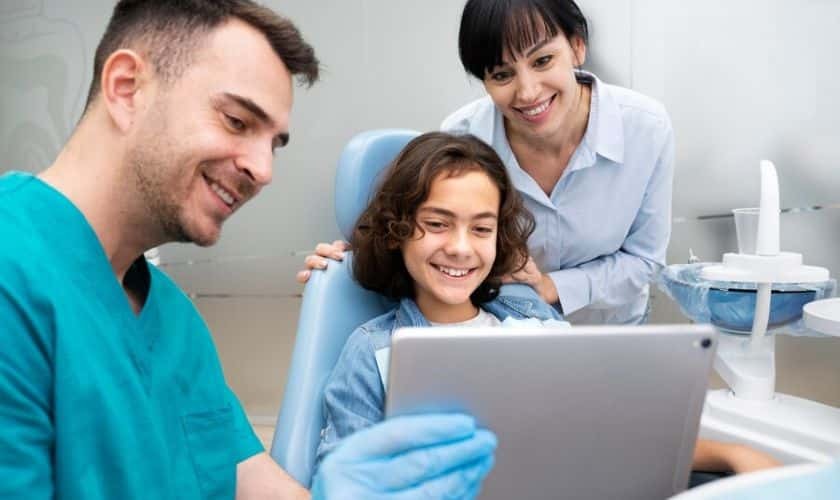
For families in Puyallup, Woodland Dental Center provides pediatric dental care that supports children’s oral development and overall health. Dr. Hanks and the dental team can evaluate concerns visible during a dental exam and help parents understand when additional medical evaluation may be appropriate.
Most importantly, sedation dentistry is not a treatment for sleep apnea itself. In many situations, a child can be evaluated for possible sleep-disordered breathing without sedation.
How Common Is Sleep Apnea in Children?
Pediatric obstructive sleep apnea is more common than many parents realize. The American Academy of Pediatrics has reported prevalence estimates ranging from approximately 1.2% to 5.7% among children.
OSA occurs when a child’s upper airway becomes partially or completely blocked during sleep. These interruptions can disturb normal breathing and sleep patterns.
A child does not necessarily wake up fully after every breathing interruption. Instead, the brain may briefly arouse the child enough to restore airflow. Repeated interruptions can prevent the child from getting the restorative sleep needed for healthy development.
The American Academy of Pediatric Dentistry notes that untreated pediatric OSA may be associated with problems involving cardiovascular health, growth, learning, and behavior.
That is why persistent snoring shouldn’t be dismissed as a harmless childhood habit.
Can a Pediatric Dentist Diagnose Sleep Apnea?
This is one of the most important distinctions for parents.
A pediatric dentist can screen for risk factors and warning signs, but a dental examination alone does not establish a definitive diagnosis of obstructive sleep apnea in Puyallup.
The American Academy of Pediatric Dentistry recommends that dental professionals screen children for sleep-related breathing disorders and refer children suspected of having OSA to an appropriate medical provider for diagnosis.
A medical evaluation may include a detailed history, physical examination, and, when appropriate, an overnight sleep study called polysomnography.
The American Academy of Pediatrics identifies polysomnography as the standard objective diagnostic test when children have snoring accompanied by symptoms or signs of OSA.
So, if your child snores regularly, a pediatric dental appointment can be a useful part of the evaluation process—but it should not replace medical diagnosis.
What Can a Pediatric Dentist Look For?
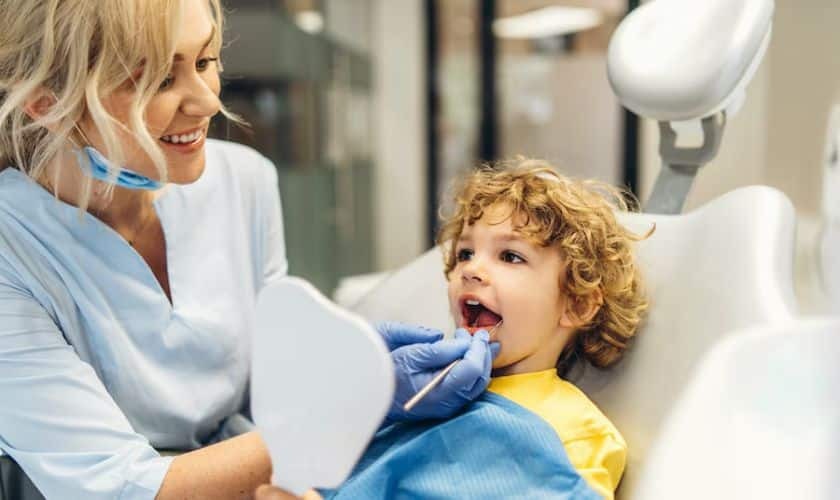
During a child’s dental exam, a dentist can evaluate structures and oral habits that may affect airway health.
Depending on the child’s age and development, the dental team may look at:
- Jaw development
- Palate shape and width
- Tongue position
- Dental development
- Bite relationships
- Mouth breathing
- Signs of tooth grinding
- Enlarged tonsils or other visible oral findings
- Facial growth patterns
- Other anatomical characteristics associated with airway concerns
The AAPD specifically encourages dental professionals to be aware of factors such as craniofacial anatomy, tonsillar enlargement, tongue position, and other contributors to sleep-disordered breathing.
This does not mean every child with a narrow palate or unusual bite has sleep apnea. Instead, these findings can help a dental professional determine whether further evaluation may be appropriate.
Can This Evaluation Be Done Without Sedation Dentistry?
Yes. In many cases, screening and routine evaluation for possible sleep apnea do not require sedation dentistry.
A standard dental examination may allow the dentist to observe the child’s teeth, gums, oral structures, jaw development, and other relevant characteristics while discussing sleep-related symptoms with the parent.
Sedation is a separate issue.
At Woodland Dental Center, sedation dentistry in Puyallup is available for appropriate dental situations, including patients with significant anxiety or those who need multiple procedures completed during an appointment.
However, sedation should not be confused with treatment for obstructive sleep apnea.
In fact, airway considerations are particularly important when sedation is being considered. Joint guidance from the American Academy of Pediatrics and American Academy of Pediatric Dentistry emphasizes evaluating children for underlying conditions and airway abnormalities that could increase risk during sedation.
That makes proper medical history and communication especially important when a child has suspected or diagnosed OSA.
What Treatments Might Be Considered Without Sedation?
Treatment depends on why the child has OSA, how severe it is, the child’s age, anatomy, growth, and medical evaluation.
No single treatment works for every child.
Medical or ENT Treatment
For children with enlarged tonsils and adenoids, medical evaluation may lead to referral to an ear, nose, and throat specialist.
The American Academy of Pediatrics recommends adenotonsillectomy as first-line treatment for children with OSA and adenotonsillar hypertrophy when surgery is appropriate.
That treatment is medical/surgical rather than dental and is not performed through sedation dentistry at a routine dental appointment.
CPAP Therapy
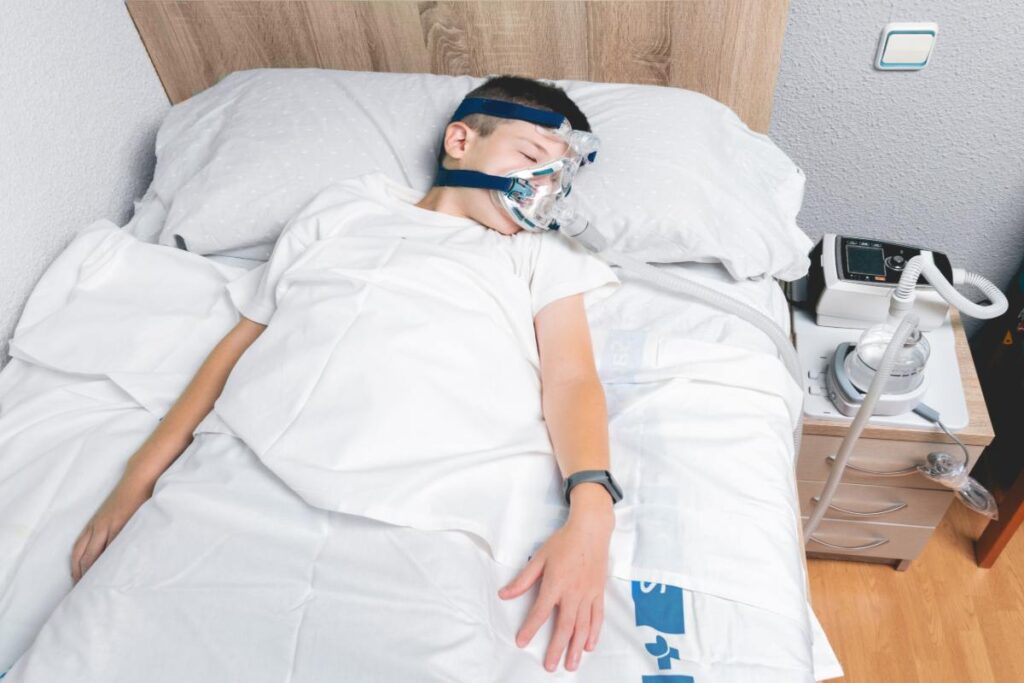
Continuous positive airway pressure, commonly called CPAP, may be recommended when surgery is not appropriate or when OSA continues after surgery.
AAP guidance specifically recommends CPAP when adenotonsillectomy is not performed or when OSA persists following surgery.
Again, this is not a dental sedation treatment.
Oral Appliance Therapy
In selected children, a dental professional may become involved in oral appliance therapy.
The AAPD states that nonsurgical intraoral appliances may be considered only after a complete orthodontic and craniofacial assessment of the child’s growth and development and as part of a multidisciplinary approach.
This is an important point because children’s jaws and teeth are still developing. Please avoid purchasing an appliance online and using it without a professional assessment.
Orthodontic or Growth-Related Treatment
Some children may have structural factors that warrant orthodontic assessment. Depending on the child’s individual anatomy and diagnosis, treatment aimed at supporting appropriate jaw and facial development may become part of a broader care plan.
However, parents should not assume that orthodontic treatment alone will resolve OSA.
The appropriate approach depends on the child’s medical diagnosis and the recommendations of the professionals involved in the child’s care.
Why Should Parents Take Childhood Snoring Seriously?
Occasional snoring can happen with a cold or nasal congestion. Persistent or loud snoring is different.
The AAP recommends screening children and adolescents for snoring, and children who snore and have signs or symptoms of OSA may need an objective evaluation.
Potential warning signs include:
- Loud, frequent snoring
- Pauses in breathing during sleep
- Gasping or choking sounds
- Mouth breathing
- Restless sleep
- Unusual sleeping positions
- Morning headaches
- Daytime fatigue
- Difficulty concentrating
- Irritability or behavioral changes
- Problems with school performance
- Bed-wetting in some children
These symptoms can have many causes, so they do not automatically mean your child has sleep apnea.
However, they are worth discussing with your child’s pediatrician and dental team.
Could a Dental Visit Be the First Step?
For some families, yes.
Parents may notice something during a child’s dental appointment that leads to a conversation about sleep. A dentist who routinely evaluates oral and facial development may recognize findings that deserve further investigation.
The AAPD specifically encourages oral health professionals to screen for sleep-related breathing disorders and facilitate medical referrals when appropriate.
At Woodland Dental Center, Dr. Hanks provides pediatric dental care in Puyallup and can discuss oral health and developmental concerns with parents. The practice also provides sleep apnea services and can refer patients to a sleep apnea specialist when appropriate.
The goal is not for the dentist to manage every aspect of sleep apnea alone. Instead, dental care can become one part of coordinated care involving the child’s pediatrician, sleep specialist, ENT physician, orthodontist, or other healthcare providers.
What If My Child Already Has a Sleep Apnea Diagnosis?
If your child has already been diagnosed with OSA, tell your dental team.
This information can help the dentist consider your child’s airway history when planning dental treatment. It is particularly important if sedation is being considered for another dental procedure.
The AAP and AAPD sedation guidelines emphasize pre-sedation evaluation for underlying medical conditions and airway abnormalities that could increase the risk associated with sedating medications.
Parents should provide the dental office with relevant medical information, including the child’s diagnosis, medications, sleep-study results when available, CPAP use, previous surgeries, and recommendations from the child’s medical providers.
Good communication between healthcare providers can make treatment planning more appropriate for the individual child.
Does Avoiding Sedation Mean Avoiding Treatment?
No.
The phrase “without sedation” can sometimes make parents think a child must either tolerate a difficult procedure without help or receive sedation.
Sleep apnea evaluation is different.
A routine dental examination, symptom discussion, visual assessment, and referral can generally occur without sedation. If the child eventually needs dental treatment unrelated to sleep apnea, the dental team can determine whether behavior guidance, local anesthesia, nitrous oxide, or another approach is appropriate.
Woodland Dental Center offers nitrous oxide and other sedation options when clinically appropriate, but selects sedation based on the child’s needs and the procedure being performed.
The decision should always be individualized rather than based simply on a child’s age or anxiety level.
When Should Parents Schedule an Evaluation?
Consider talking with your child’s pediatrician and dental team if you regularly notice loud snoring, breathing pauses, gasping, mouth breathing, restless sleep, or daytime changes in behavior and concentration.
You should also mention any concerns during routine dental visits.
A pediatric dentist cannot diagnose every cause of nighttime breathing problems, but dental examinations can provide useful information about oral and facial development. When appropriate, the dentist can recommend medical evaluation.
For families in Puyallup, Woodland Dental Center provides pediatric dental services for children at different stages of development. Dr. Hanks and the team can discuss your child’s dental health and help determine whether another healthcare professional should follow up on a concern.
Conclusion
So, can a pediatric dentist treat sleep apnea in children without sedation dentistry?
A pediatric dentist can play an important role in the care of a child with suspected or diagnosed sleep apnea, and many aspects of dental screening and evaluation can be completed without sedation.
However, pediatric dentists generally do not diagnose OSA independently. The AAPD recommends screening and referral to an appropriate medical provider when OSA is suspected, while treatment depends on the underlying cause and severity.
Medical treatments may include adenotonsillectomy, CPAP, or other approaches. In selected children, dental or orthodontic therapies may become part of a multidisciplinary treatment plan.
At Woodland Dental Center, Dr. Hanks can evaluate your child’s oral and developmental health, discuss concerns related to sleep-disordered breathing, and help coordinate appropriate care when further evaluation is needed.
Visit our dental practice in Puyallup to discuss your child’s dental and airway-related concerns. Book Now to schedule your appointment with our team.
Frequently Asked Questions
1. Can Woodland Dental Center check my child for signs of sleep apnea?
Yes. Dr. Hanks and the dental team can evaluate oral and developmental findings associated with sleep-disordered breathing and recommend medical evaluation when appropriate.
2. Does my child need sedation for a sleep apnea screening?
A routine dental screening for possible sleep-related breathing problems does not normally require sedation. The dentist can examine the child’s mouth, jaw, and related structures while discussing symptoms with the parent.
3. Can a dentist diagnose pediatric sleep apnea?
A dentist can identify warning signs and risk factors, but a confirmed diagnosis generally requires evaluation by a medical provider and, when indicated, a sleep study.
4. Can my child receive sleep apnea treatment from a dentist?
Some children may benefit from dental or oral appliance therapy as part of a multidisciplinary treatment plan. The AAPD recommends considering nonsurgical intraoral appliances only after appropriate assessment of the child’s growth and development.
5. Should I tell the dentist if my child already has sleep apnea?
Yes. Tell the dental team about the diagnosis, current treatment, medications, and recommendations from your child’s healthcare providers. This information is especially important if your child may need sedation for dental treatment.