Missing a tooth can be a real downer—it affects your smile, your bite, and even your confidence. If you’re one of the 69% of adults in the U.S. aged 35 to 44 who have lost at least one permanent tooth, you know this challenge well. The good news? Modern dentistry offers incredible solutions!
But when you’re faced with the choice between a dental implant and a traditional bridge, how do you decide? It can feel overwhelming, like choosing between a quick fix and a long-term investment.
Let’s break down the data, including the pros, cons, and costs, of dental implants versus bridges to help you and your dentist make the best, most informed decision for your smile and overall health.
What each option
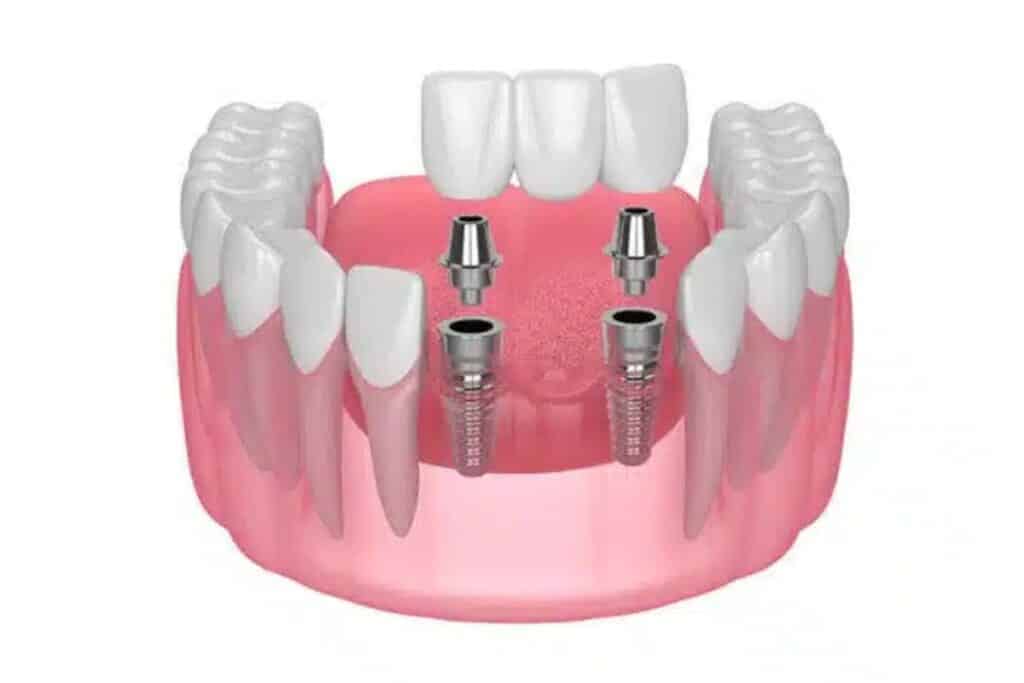
- Dental implant — a titanium screw placed in the jawbone that osseointegrates (fuses) with bone; after healing, a crown is attached. Implants replace the root and the visible tooth.
- Fixed bridge — a prosthetic tooth (pontic) mounted between crowns placed on the adjacent natural teeth; it “bridges” the gap but relies on those neighboring teeth for support.
Key differences with numbers (what matters most)
Longevity & success
- Implants: Multiple long-term studies report cumulative survival/success rates above 90% at 10–15 years, with many implants lasting decades when well cared for. One large review reported a 92% survival rate for two-stage implants at 15 years.
- Bridges: Typical 10-year survival rates range from ~79% to 94%, depending on the bridge type and maintenance; standard failure modes include decay of the supporting teeth or fracture of the restoration.
Budget (Averages highly variable by region and case complexity)
- Single-tooth implant (implant + abutment + crown): national averages commonly reported in the range for the implant component; often lands in many practices.
- Fixed bridge: typically less expensive up-front — the bridge itself (per tooth replaced) plus crowns for adjacent teeth often totals several hundred to a few thousand dollars, depending on materials. However, remember that later repairs or replacements/replacements and effects on natural teeth factor into the long-term cost.
Oral-health effects
- Bone preservation: Implants act like natural roots and help preserve jawbone height; bridges do not stop bone loss in the gap. Bone loss under a pontic can change gum contours and may require future work.
- Impact on adjacent teeth: Bridges require grinding down (preparing) the neighboring teeth for crowns, permanently altering the healthy tooth structure. In contrast, implants spare adjacent teeth.
Function & patient satisfaction
- Studies have shown high patient satisfaction and improved quality of life with implant-supported restorations, particularly in terms of chewing efficiency and aesthetics at long-term follow-up (10+ years).
Who’s a candidate?
- Good candidates for implants are generally healthy adults with adequate bone (or willing to undergo bone grafting when necessary) and controlled chronic conditions (e.g., diabetes under reasonable control). Non-smokers tend to have better long-term outcomes.
- Better for bridges: patients who want a lower up-front cost, have medical reasons preventing surgery, or whose bone quality/quantity is insufficient, and who prefer to avoid grafting. Additionally, an option is to consider neighboring teeth that already require crowns.
Dental Implants: The Long-Term Champion
A dental implant in Puyallup is essentially an artificial tooth root, typically a titanium post, surgically placed into your jawbone. Once it fuses with the bone (a process known as osseointegration), a custom-made crown is securely attached.
The Data Speaks for Implants:
- Exceptional Longevity: Clinical studies demonstrate a high long-term success rate, often exceeding 95% at the 10-year mark. With proper care, the implant post itself can last a lifetime.
- Bone Preservation: Implants are the only tooth replacement option that addresses jawbone loss and maintains the integrity of the jawbone. When a tooth root is gone, the surrounding bone begins to atrophy. The implant post stimulates the surrounding bone, thereby maintaining facial structure and promoting oral health.
- Patient Satisfaction: Studies indicate that patients with single-tooth implants report significantly higher satisfaction with existing appearance, chewing function, and phonetics compared to those with certain types of bridges.
Key Trade-Offs: The most significant barriers are often the initial cost and the longer timeline, due to the surgical nature and the associated healing period. However, given their potential to last a lifetime, the overall lifetime cost can be lower than continually replacing bridges.
Traditional Bridges: The Efficient Solution
A dental bridge “bridges” the gap created by one or more missing teeth. It consists of an artificial tooth (pontic) held in place by crowns placed on the healthy natural teeth on either side of the gap.
The Data Speaks for Bridges:
- Quick Restoration: For patients seeking a faster solution, a bridge can typically be completed in just a few weeks, thereby avoiding the multi-month healing process associated with an implant.
- Affordable Upfront Cost: The initial investment for a bridge is often lower than for a single implant, making it a more accessible option for some budgets.
- Viable for Certain Cases: If the adjacent teeth are already damaged or require crowns, a bridge can be an effective way to restore all three teeth simultaneously.
Key Trade-Offs: The major drawback is the necessity to file down healthy, adjacent teeth to fit the crowns. This compromises the integrity of those teeth, making them more susceptible to decay or needing root canals later. Additionally, bridges have a limited lifespan, typically requiring replacement every 5 to 15 years, which leads to compounding long-term costs.
How dentists decide (a short checklist they use)
- Number of missing teeth and location (front vs back)
- Condition of adjacent teeth (do they already need crowns?)
- Jawbone volume and health (is grafting needed?)
- Medical history (healing capacity, smoking, diabetes control)
- Budget and insurance coverage/preference for surgery or not.
Making the Right Choice for You
Ultimately, the best option depends on your specific circumstances, including:
- Your Oral Health: Do You Have Sufficient Jawbone Density for an Implant? Are the adjacent teeth healthy?
- Your Budget: Are you focused on the lower upfront cost (bridge) or the long-term value (implant)?
- Your Time: Can you commit to the longer treatment time required for an implant?
- Your Goals: Is preserving your adjacent healthy teeth and jawbone a top priority?
A consultation with your dental professional, including an X-ray or CT scan, is crucial to evaluate your bone health and the condition of your remaining teeth.
The Bottom Line
For most patients in good oral health, the dental implant is the superior long-term solution due to its unmatched durability, bone-preserving benefits, and lack of reliance on adjacent teeth. While the upfront cost is higher, its high survival rate (over 95% at 10 years) means it often provides the best value over the course of your lifetime.
A traditional bridge is an excellent option if your adjacent teeth already need restorative work (like crowns), if you have medical conditions that prevent surgery, or if you require the fastest possible tooth replacement. Discuss both options with your qualified dentist in Puyallup (and ask for a written plan including projected costs, timeline, and any needed grafting) to choose the path that fits your health and life goals.
FAQs on Tooth Replacement
- Which option is easier to clean?
A. Dental implants are generally easier to clean because you brush and floss around them just like a natural tooth. A dental bridge requires special tools (like a floss threader) to clean underneath the pontic (the artificial tooth) to prevent plaque buildup and decay on the supporting natural teeth.
- Does insurance cover dental implants or bridges?
A. Coverage varies significantly by plan. Dental insurance may cover a portion of the cost of a bridge, as it’s considered a necessary restorative procedure. Implant coverage is less common, but many plans now offer some coverage for the procedure, while the implant crown may be covered under restorative benefits. Always check with your specific provider.
- Can I get an implant if I have bone loss?
A. Yes, in many cases. If your jawbone is insufficient, a bone grafting procedure can be performed prior to or during implant placement to build up the necessary bone volume. This does, however, increase the total treatment time and cost.
- What happens if a dental bridge fails?
A. Bridge failure often occurs due to decay, fracture of the supporting natural teeth, or loosening. If the supporting teeth are lost or damaged beyond repair, a larger, more complex bridge may be needed, or the area may then require multiple dental implants.
- Are there other types of bridges that don’t harm adjacent teeth?
A. Yes, options like a Maryland bridge or a Cantilever bridge require less alteration of adjacent teeth. Still, they are generally less stable and may not be suitable for all areas of the mouth, especially where heavy biting force is present.