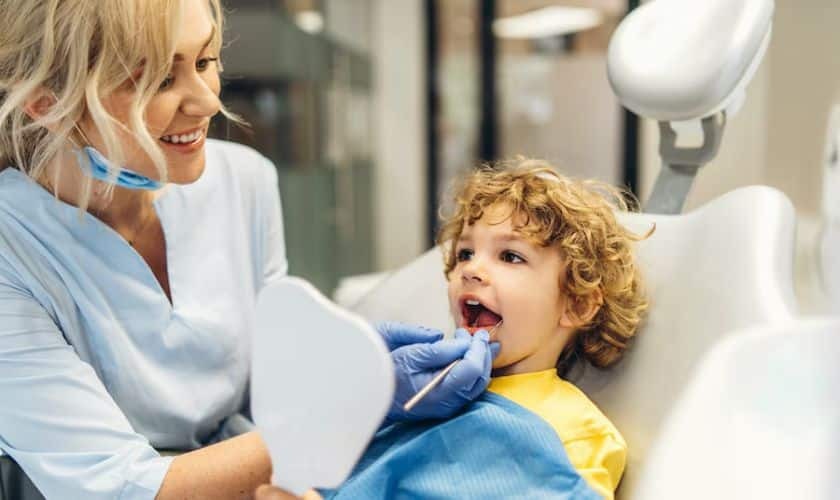
Does your child become nervous the moment you mention a dental appointment? Maybe they have had a difficult dental experience before, dislike the sound of dental instruments, or feel overwhelmed when sitting in the dental chair. If you live in Puyallup, you may be wondering whether sedation dentistry could make dental treatment more comfortable for your child.
Dental anxiety can make it harder for some children to cooperate during treatment. When fear prevents a child from receiving necessary dental care, sedation may be one of several behavior-guidance options a dentist considers. However, sedation is not automatically necessary for every child. The appropriate approach depends on the child’s age, development, temperament, medical history, dental needs, and the type of procedure being performed.
The American Academy of Pediatric Dentistry (AAPD) recommends individualized behavior guidance for children, ranging from communication and distraction techniques to pharmacological approaches such as nitrous oxide and sedation when appropriate.
At Woodland Dental Center in Puyallup, Dr. Hanks can evaluate your child’s dental needs and discuss appropriate ways to make treatment more comfortable and manageable.
Why Can Children Feel Stressed About Dental Treatment?
Children may experience dental stress for many different reasons.
A child who has never visited a dentist before may feel uncertain about what will happen. Another child may remember an uncomfortable procedure from a previous appointment. Some children may have difficulty sitting still for extended periods, while others may become anxious because they do not understand why treatment is necessary.
Common reasons children may feel nervous about dental visits include:
- Fear of unfamiliar surroundings
- Concern about dental instruments
- Previous uncomfortable experiences
- Fear of injections or needles
- Sensitivity to sounds, smells, or sensations
- Difficulty remaining still
- Developmental or communication challenges
- A large amount of dental treatment being needed
The AAPD recommends considering a child’s medical history, temperament, emotional development, previous behavior during treatment, treatment needs, and available alternatives when developing a behavior-guidance plan.
This means no single approach works for every child.
How Common Are Dental Problems in Children?
Dental treatment is not simply about correcting cosmetic concerns. Children can develop cavities and other oral health problems that require professional care.
According to the CDC, more than half of children ages 6 to 8 have had a cavity in at least one primary tooth. More than half of adolescents ages 12 to 19 have also had a cavity in at least one permanent tooth.
The CDC’s 2024 oral health surveillance data found that approximately 17% of children ages 6 to 9 had at least one untreated cavity, while about 10% of adolescents ages 12 to 19 had at least one untreated cavity in their permanent teeth.
These statistics demonstrate why regular dental care matters. If anxiety prevents a child from attending appointments or completing necessary treatment, the problem may have an opportunity to become more extensive.
Can Sedation Reduce Dental Treatment Stress?
For appropriately selected children, sedation may help reduce anxiety and improve cooperation during dental procedures.
The AAPD describes sedation as an advanced behavior-guidance option that may be considered when basic techniques are insufficient or inappropriate. Its goals can include minimizing discomfort and anxiety, controlling behavior, and helping the dental team safely complete necessary treatment.
Sedation dentistry in Puyallup does not mean every child will be completely unconscious.
Different levels and types of sedation produce different effects. Some children may remain awake and able to communicate, while feeling more relaxed. Other forms of sedation are deeper and require more extensive monitoring and specialized care.
Parents should understand this distinction.
What Is Nitrous Oxide Sedation?
One commonly discussed option for children is nitrous oxide combined with oxygen.
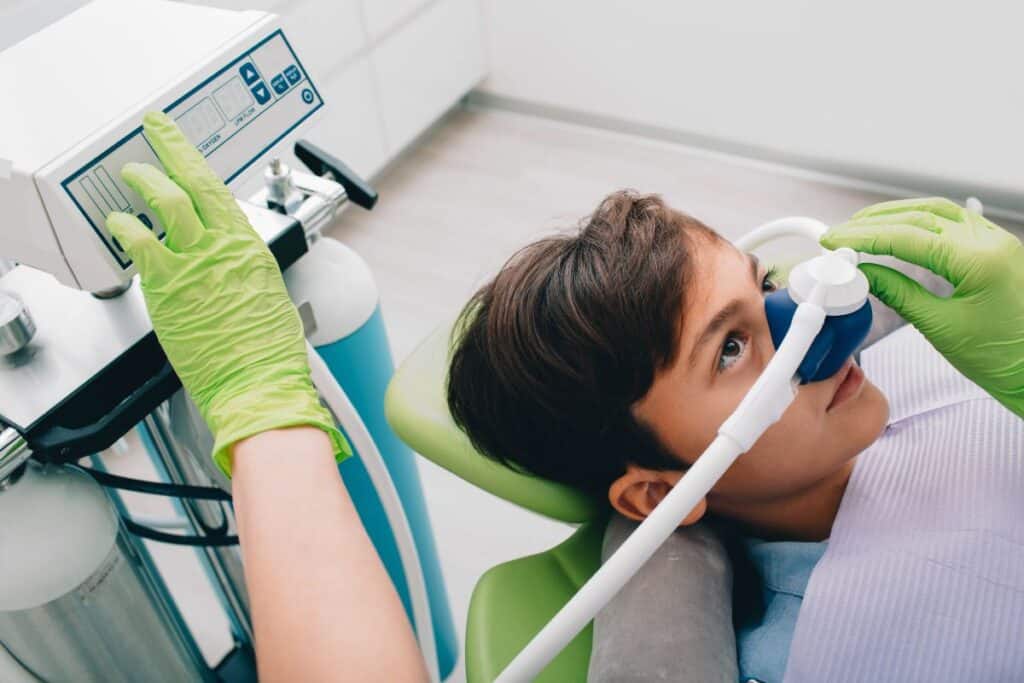
Often called “laughing gas,” nitrous oxide is inhaled through a small mask placed over the child’s nose. It can help some children feel more relaxed during dental treatment.
The AAPD recognizes nitrous oxide/oxygen inhalation as a behavior-management option for pediatric dental patients and states that judicious use can be a safe and effective method of controlling anxiety when appropriate.
Nitrous oxide is not appropriate for every child. Before using it, the dental team should consider the child’s physical and emotional development, medical and dental history, treatment needs, alternatives, equipment, personnel, and monitoring requirements.
Our pediatric dentist in Puyallup can explain whether this approach may be suitable for your child.
Does Sedation Put a Child to Sleep?
Not necessarily.
The word “sedation” covers different levels of reduced anxiety and consciousness. Some forms allow a child to remain responsive, while deeper sedation can significantly reduce responsiveness.
General anesthesia is different from routine minimal or moderate sedation. Under general anesthesia, the patient is unconscious and requires a different level of anesthesia care and monitoring.
Parents should ask exactly what type of sedation is being recommended, what level of consciousness is expected, who will administer it, and how the child will be monitored.
The AAPD and American Academy of Pediatrics emphasize that safe pediatric sedation requires careful presedation assessment, appropriate fasting when applicable, airway evaluation, trained personnel, appropriate equipment, physiologic monitoring, recovery procedures, and discharge instructions.
What Are the Benefits of Sedation Dentistry for Children?
When appropriate, sedation may provide several practical benefits.
It May Reduce Anxiety
A relaxed child may have an easier time tolerating dental treatment. Reducing anxiety can also make communication and cooperation easier.
It May Improve the Treatment Experience
If a child is less fearful, the dental team may be able to perform necessary treatment more efficiently and comfortably.
It May Help With Certain Treatment Needs
Some children need multiple procedures or have difficulty cooperating because of their age or developmental stage. Sedation may sometimes be considered when basic behavior-guidance techniques are not enough.
It May Help Children With Previous Difficult Experiences
A particularly stressful dental experience can affect how a child approaches future appointments. An individualized behavior-guidance plan may help prevent fear from becoming an ongoing barrier to dental care.
However, sedation is only one possible approach.
The AAPD notes that nonpharmacological methods such as positive reinforcement, distraction, relaxation, modeling, tell-show-do, and other techniques can also be effective depending on the child and situation.
What Other Techniques Can Reduce Dental Anxiety?
Sedation does not always need to be the first step.
Many children respond well to simple behavior-guidance techniques.
A dentist may use:
- Tell-show-do
- Positive reinforcement
- Age-appropriate explanations
- Distraction
- Audiovisual entertainment
- Breathing exercises
- Relaxation techniques
- Modeling
- Desensitization
- Positive pre-visit communication
The AAPD’s review of nonpharmacological behavior guidance found that several approaches—including modeling, positive reinforcement, audiovisual distraction, breathing relaxation, and cognitive behavioral therapy—can substantially reduce anxiety in certain pediatric dental treatment settings. The organization also emphasizes that the evidence varies and that choices should be individualized.
This means parents do not necessarily have to choose between “no help” and sedation. There may be several steps between those options.
When Might a Dentist Consider Sedation?
A dentist may consider sedation when a child cannot cooperate adequately with necessary treatment despite appropriate basic behavior-guidance techniques.
Possible considerations include:
- Significant dental anxiety
- Young age or limited emotional maturity
- Extensive treatment needs
- Previous unsuccessful dental appointments
- Difficulty remaining still
- Certain special healthcare needs
- The need to complete treatment safely and effectively
The AAPD states that sedation decisions should consider alternative behavior-guidance options, dental needs, the effect on quality of care, emotional development, and medical and physical considerations.
The goal should not simply be to make a child “sleep through” treatment. The goal is to provide safe, appropriate care while considering the child’s comfort, development, and overall well-being.
Is Pediatric Dental Sedation Safe?
Sedation can be used safely when appropriately indicated and administered under proper protocols, but it is not risk-free.
Children respond differently to medications than adults, and their airways and medication requirements require special consideration.
The AAPD’s current sedation guidance emphasizes several safety measures, including:
- Pre-sedation medical evaluation
- Appropriate fasting when required
- Airway assessment
- Trained personnel
- Age- and size-appropriate equipment
- Physiologic monitoring
- Appropriate emergency equipment and medications
- Monitoring during recovery
- Recovery to an appropriate level of consciousness before discharge
- Clear instructions for parents or caregivers
These safeguards are an important part of responsible pediatric sedation.
Parents should feel comfortable asking questions about the type of sedation, who administers it, monitoring procedures, potential side effects, and aftercare instructions.
What Should Parents Tell the Dentist Before Sedation?
Providing complete medical information is especially important when you’re considering sedation.
Tell your dental team about:
- Current medications
- Allergies
- Medical conditions
- Previous reactions to anesthesia or sedation
- Recent illnesses
- Breathing problems
- Previous dental experiences
- Eating and drinking before the appointment
- Any concerns about your child’s behavior or anxiety
The dentist may also need information about your child’s weight, developmental history, and previous responses to medications.
Do not assume that information from a previous medical appointment automatically appears in your child’s dental record.
What Happens Before a Child Receives Sedation?
A proper evaluation should occur before administering sedation.
The dental team may review the child’s medical history and dental treatment needs and determine whether sedation is appropriate.
For elective sedation, fasting instructions may apply. Follow these instructions carefully, as they are part of the safety process.
The AAPD recommends a systematic approach that includes presedation evaluation, appropriate fasting, airway assessment, monitoring, trained personnel, and recovery procedures.
Parents should receive clear instructions before the appointment and know what to expect afterward.
What Should Parents Expect After Sedation?
Recovery depends on the type and depth of sedation used.
After certain forms of sedation, a child may temporarily feel tired, drowsy, or different than usual. Parents should follow the dental team’s instructions regarding eating, drinking, activity, supervision, and transportation.
Children should not resume normal activities until the dental team determines it is appropriate.
The AAPD’s sedation guidelines emphasize monitoring during recovery and ensuring that the child has returned to an appropriate level of consciousness before discharge from dental supervision.
If your child develops unexpected or concerning symptoms after sedation, follow your dental team’s instructions and seek appropriate medical attention when necessary.
Can Sedation Prevent Future Dental Fear?
Sedation may make a particular dental experience easier, but it should not be viewed as a guaranteed way to eliminate dental anxiety permanently.
Long-term comfort with dental care can also depend on positive experiences, age-appropriate communication, preventive visits, trust with the dental team, and gradually becoming familiar with the dental environment.
For some children, behavioral strategies may be particularly valuable because they can teach coping skills that remain useful during future appointments.
The AAPD recommends customized behavior guidance rather than assuming one technique fits every child.
How Can Woodland Dental Center Help Children in Puyallup?
If your child becomes nervous about dental treatment, you do not have to figure out the best approach alone.
At Woodland Dental Center in Puyallup, Dr. Hanks can discuss your child’s dental concerns, previous experiences, treatment needs, and comfort level.
Depending on the circumstances, the dental team may consider communication, distraction, positive reinforcement, nitrous oxide, or other behavior-guidance approaches. Whether sedation is appropriate depends on an individual evaluation and the specific treatment being planned.
The goal is to help children receive the dental care they need while making the experience as comfortable and supportive as possible.
Conclusion
So, can sedation dentistry reduce dental treatment stress for children? For appropriately selected patients, sedation can be one tool for reducing anxiety and improving cooperation during dental treatment. However, it is not automatically necessary for every child.
The CDC reports that more than half of U.S. children ages 6 to 8 have had a cavity in at least one primary tooth, while about 10% of adolescents ages 12 to 19 have at least one untreated cavity in their permanent teeth.
Because children have different emotional, developmental, medical, and dental needs, behavior guidance should be individualized. The AAPD recognizes approaches ranging from communication and distraction to nitrous oxide and deeper sedation when indicated.
Safety is equally important. Pediatric sedation should involve appropriate patient assessment, trained personnel, monitoring, emergency preparedness, and recovery procedures.
If your child is anxious about dental treatment, talk with your dentist about the available options before the appointment. At Woodland Dental Center, Dr. Hanks can evaluate your child’s needs and help you understand which behavior-guidance approaches may be appropriate.
Visit our dental practice in Puyallup. Book now to schedule your appointment with our team.
Frequently Asked Questions
1. What dental services does Woodland Dental Center provide?
Our dental practice provides a range of dental services designed to support children’s and families’ preventive, restorative, and general oral health needs. Dr. Hanks can recommend appropriate care based on your child’s individual dental needs.
2. How can I schedule an appointment for my child?
You can contact our dental practice to schedule an appointment. Our team can help you choose an appropriate appointment time and answer questions about your child’s visit.
3. What should I expect during my child’s first dental visit?
Your child’s visit may include a review of their dental and medical history, an age-appropriate oral examination, preventive care when appropriate, and a discussion of any concerns you may have about their teeth or dental experiences.
4. Can Dr. Hanks create a treatment plan based on my child’s needs?
Yes. Children’s dental care should be individualized according to their age, development, oral health, treatment needs, and comfort level. Dr. Hanks can discuss appropriate treatment and behavior-guidance options with you.
5. When should I bring my child to the dentist?
Children should receive regular dental care rather than waiting until they develop pain. Contact the dental practice if your child has tooth pain, sensitivity, swelling, difficulty eating, a broken tooth, or another oral health concern. Regular visits can also help identify problems before they become more serious.