Have you ever reached for a mint, only to realize ten minutes later that the “dragon breath” is already back? Or maybe you’ve noticed a co-worker taking a subtle step back during a conversation. It’s frustrating, and let’s be honest, a little embarrassing. But what if I told you that for 80% of people with chronic bad breath, the problem isn’t the garlic knots you had for lunch—it’s actually an invisible infection lurking beneath your gum line?
Welcome to the world of halitosis and its most common accomplice: Periodontal (Gum) Disease. In this deep dive, we’re going to look at why your toothbrush might be missing the real culprit and how a “silent” disease could be affecting your confidence and your health.
According to a study published in the Journal of Natural Science, Biology, and Medicine, VSCs are responsible for nearly 90% of oral-origin halitosis. When you have gum disease, the concentration of these gases skyrockets because the bacteria are tucked away in pockets where your toothbrush and mouthwash cannot reach.
How Common Is Bad Breath, And Why Does It Matter?
Let’s start with the big picture.
About 65 million Americans experience bad breath at some point in their lives.
That’s roughly 1 in every 5 adults dealing with halitosis big enough to notice.
Estimates also show:
50–65% of people worldwide experience bad breath at some time.
About 90% of cases of chronic bad breath originate in the mouth, not the stomach or lungs.
Translation? If your breath isn’t fresh even after brushing, the mouth itself is the most likely source. And a significant reason for that is gum disease.
Gum Disease 101: More Common Than You Think
Gum disease — also called periodontal disease — starts quietly and grows slowly.
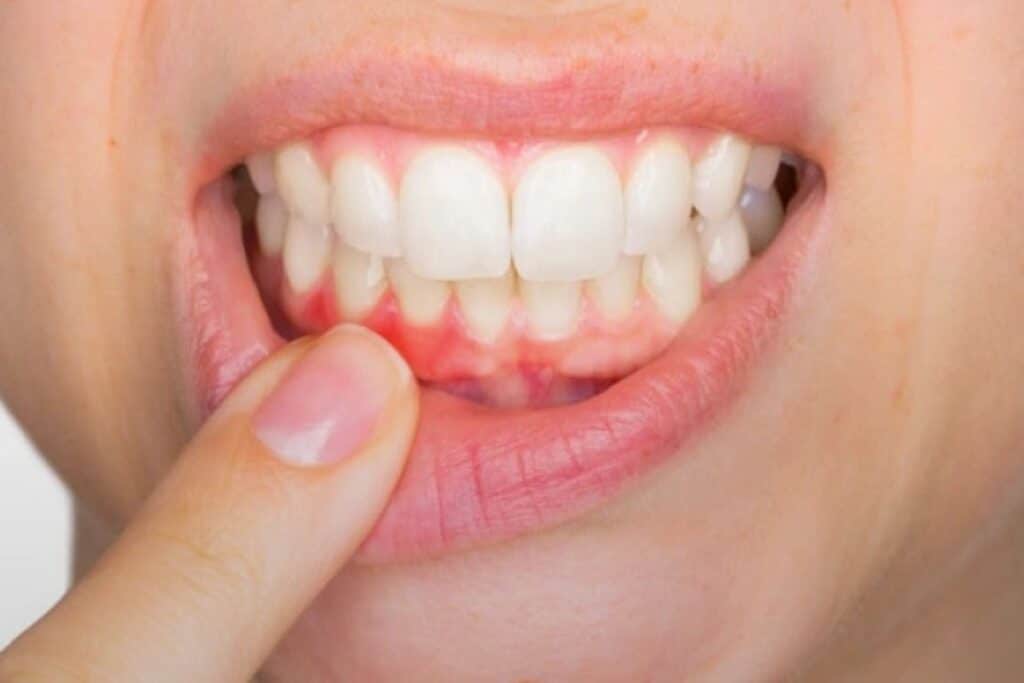
It begins as gingivitis, the mild form in which the gums become red, swollen, and bleed easily. Left untreated, it can progress to periodontitis, in which the infection spreads deeper, harming the bone and tissues that support your teeth.
Here’s how common gum disease is in the United States:
About 42% of adults aged 30+ have periodontitis.
Roughly 70% of adults 65 and older show signs of periodontal disease.
In other words, gum disease is widespread and often silent — especially in adults.
And while many Americans know about cavities, far fewer realize gum disease may be the primary driver of persistent bad breath.
Why Gum Disease Causes Bad Breath
To understand the link, we need to look at what bacteria do in your mouth.
Your mouth naturally hosts billions of bacteria — some helpful, others less so. When plaque builds up along your gum line and teeth, harmful bacteria thrive. These bacteria feed on proteins and produce chemicals known as volatile sulfur compounds (VSCs) — the same smelly gases that give rotten eggs their signature odor.
Because gum disease allows bacteria to accumulate deep in gum pockets — places regular brushing and flossing often can’t reach — the environment becomes a hotspot for bacteria that produce these foul-smelling gases.
In fact:
Up to 80% of people with gum disease also have bad breath.
That means if your gum health is compromised, there’s a significant chance your bad breath isn’t just dietary — it’s biological.
The Science Behind the Smell: Bacteria & VSCs
Let’s break this down:
- Bacteria thrive in gum pockets — especially where plaque and tartar build up.
- These bacteria digest leftover proteins from food and oral tissues.
- As they do so, they release VSCs, particularly methyl mercaptan and hydrogen sulfide — two gases with strong, foul odors.
This bacterial activity explains why bad breath may persist even after brushing, flossing, and rinsing with mouthwash. Mouthwash might mask odors temporarily, but it doesn’t reach below the gum line, where these bacteria are busy at work.
Signs Your Bad Breath Might Be Gum-Related
So how do you know when bad breath is more than “just morning breath”? Here are some red flags:
- Persistent bad breath that doesn’t improve after brushing or using mint products.
- Bleeding gums when you brush or floss.
- Swollen, tender, or red gums.
- Receding gums or a smile that looks “longer.”
- A bad taste in your mouth, even without eating anything pungent.
If these sound familiar — especially together — it’s a strong indicator that gum disease (and the bacteria tied to it) might be behind your breath troubles.
Why Mouthwash & Gum Chewing Aren’t Long-Term Fixes
We all reach for mint gum or mouthwash when we want quick, fresh breath. And sure, they help for a little while.
But here’s the reality:
- Mouthwash often only masks odor; it doesn’t eliminate the bacteria beneath the gum line.
- Mint gum may stimulate saliva, but it doesn’t kill the bacteria in deep gum pockets.
The bacterial colonies that cause halitosis live in tiny spaces between teeth and gums — places a toothbrush, mouthwash, or mint can’t reach effectively without professional intervention.
The only way to genuinely tackle chronic bad breath caused by gum disease is by addressing the underlying infection through proper dental care.
Other Causes of Bad Breath — But Gum Disease Leads the Pack
Bad breath isn’t only linked to gum disease. Other possible contributors include:
- Dry mouth (xerostomia) — saliva helps wash away odor-causing bacteria.
- Strong-smelling foods — like garlic or onions (temporary).
- Tobacco use also increases gum disease risk.
- Sinus issues or tonsil stones — sometimes implicated in persistent bad breath.
However, research indicates that 80–90% of cases of bad breath stem from the mouth itself, with gum-related bacterial activity as the primary source.
While other factors may contribute, gum disease remains the most common hidden cause of persistent halitosis.
Getting Ahead of It: What You Can Do
Alright — enough about the problem. Let’s talk solutions.
Elevate Your Daily Oral Hygiene
- Brush with fluoride toothpaste twice a day.
- Floss daily to reach between teeth.
- Use a tongue scraper — a central bacterial hiding spot.
- Consider an antibacterial rinse recommended by your qualified dentist in Puyallup.
These steps help disrupt plaque buildup and reduce the bacterial load responsible for bad breath and gum disease.
Visit Your Dentist Regularly
Professional cleaning does what brushing can’t — it removes tartar and bacteria buildup below the gum line.
A dentist can also:
- Measure gum pockets
- Diagnose gingivitis or periodontitis early
- Recommend deeper cleanings or treatments.
For many people with gum disease, professional care is what finally resolves chronic bad breath.
Seek Treatment for Gum Disease
If your dentist identifies gum disease, treatment may include:
- Scaling and root planing — deep cleaning under the gums
- Antibiotic therapy — to reduce bacterial infection
- Ongoing periodontal maintenance — to prevent recurrence
When gum disease is effectively controlled, the associated bad breath typically improves.
Conclusion
Bad breath is more than a social inconvenience; it is often a biological SOS. If your mints are failing you, it’s time to stop treating the symptom and start treating the source. With nearly half of the American adult population suffering from some form of gum disease, there is no shame in seeking help. Taking care of your gums won’t just save your breath—it might just save your teeth and your long-term health.
Frequently Asked Questions
- Can gum disease cause bad breath even if I brush daily?
Yes. While brushing cleans surface areas, gum disease often occurs below the gum line, where bacteria produce foul-smelling compounds. Professional dental care is usually needed to address this. - How common is bad breath in the U.S.?
About 65 million Americans experience bad breath, and most cases are caused by oral factors such as gum disease and bacterial growth. - How much of bad breath is caused by gum disease vs. food?
Research suggests that 80–90% of chronic bad breath is due to bacteria in the mouth, many of which are linked to gum disease and plaque. - Will mouthwash fix gum-related bad breath?
Mouthwash can temporarily reduce odor, but it typically cannot eliminate the bacteria deep in gum pockets that cause persistent bad breath. - When should I see a dentist about bad breath?
See a dentist if bad breath persists despite good oral hygiene, if your gums bleed or look inflamed, or if you notice changes like gum recession. Early treatment improves outcomes.