You’re sitting in the waiting room, scrolling through your phone, when you hear a familiar cry. Your stomach drops. You know that cry—it’s your little one, and they are not happy about being in the dental chair.
As a pediatric dentist, I see this scenario play out daily. When I recommend sedation for a toddler’s filling or extraction, I often see a different kind of look on parents’ faces: fear.
“Is it really necessary?” “They’re just baby teeth—can’t we just hold them down?” “Is it safe?”
These are valid, protective instincts. But let’s look at the facts. Sedation isn’t about “knocking kids out” for convenience; it is a critical tool for safety and emotional well-being. Today, I’m pulling back the curtain on why we use sedation, backed by the latest data and safety guidelines.
Why treating baby teeth matters
Baby (primary) teeth aren’t “throwaways.” They help kids chew, speak, guide the alignment of adult teeth, and support self-esteem. Tooth decay in young children is common: nearly 1 in 4 children aged 2–5 have had decay in primary teeth, and almost 46% of children aged 2–19 have had untreated or restored caries in at least one tooth (NHANES data). Treating decay early lowers pain, infection, and the need for more invasive care later.
What is “sedation” in pediatric dentistry?
“Sedation” covers a spectrum:
- Behavioral guidance and local anesthesia (no sedative drugs) — often enough for cooperative toddlers.
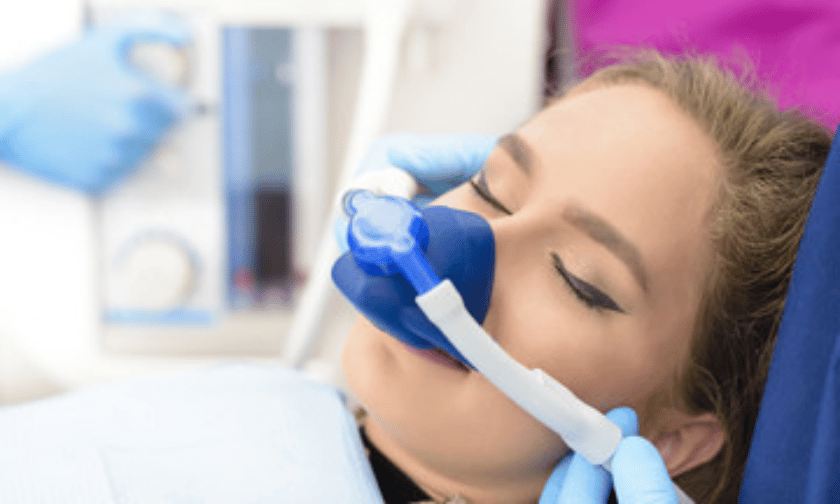
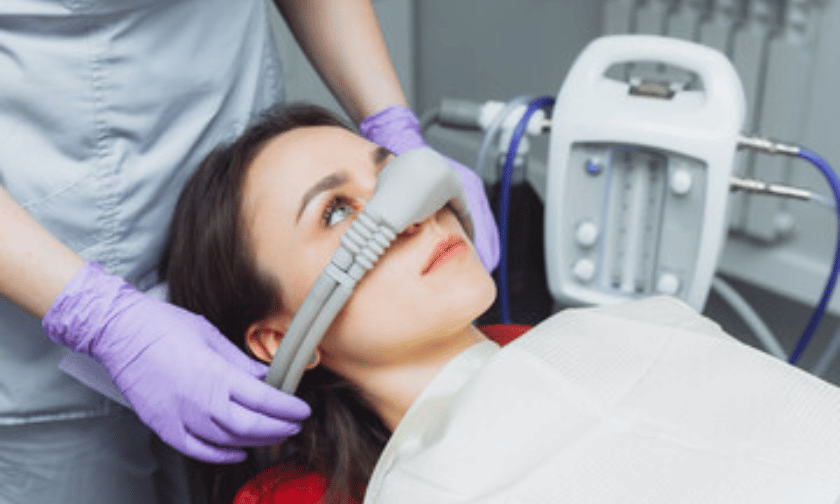
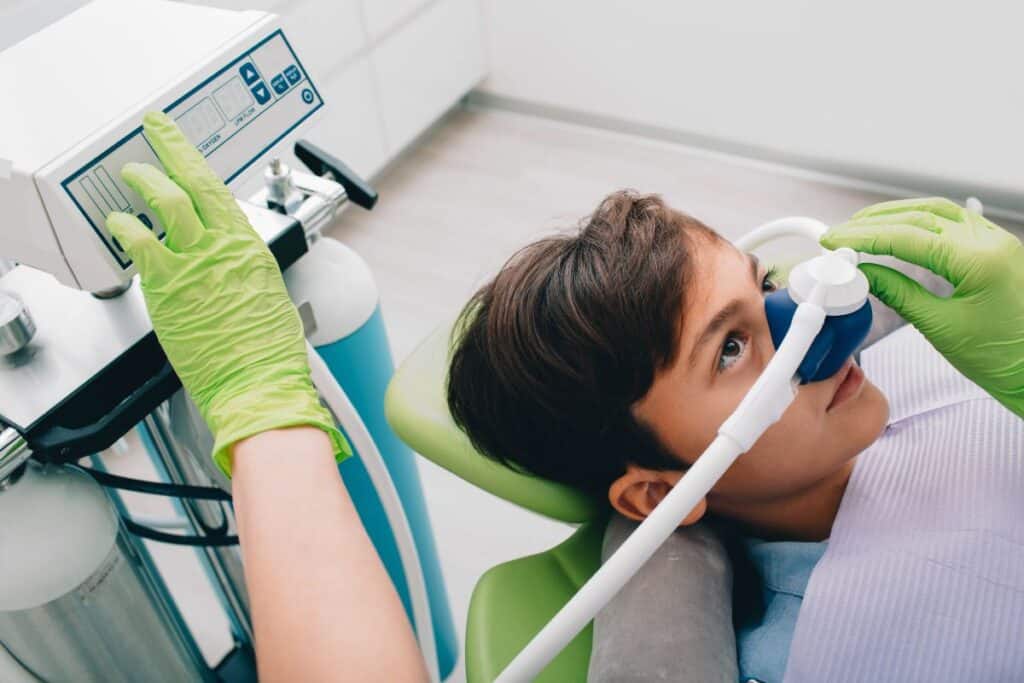
- Nitrous oxide (laughing gas) — mild sedation; child remains awake, relaxed, easily awakened.
- Oral conscious sedation — medication by mouth to reduce anxiety; may cause drowsiness.
- Intravenous (IV) sedation / deep sedation / general anesthesia — child is deeply sedated or asleep; used for complex or extensive procedures or when cooperation is impossible.
Clinical guidelines emphasize matching sedation level to the child’s needs and the complexity of the procedure.
When is sedation recommended for baby tooth treatments?
Pediatric dentists generally consider sedation when one or more of the following apply:
- Extensive treatment is needed in a single visit (multiple teeth, crowns, pulpotomies) — sedation dentistry in Puyallup can enable safe, efficient care.
- Severe anxiety or uncooperative behavior that prevents safe treatment despite non-pharmacologic behavior guidance.
- Very young children or special health care needs who cannot reliably follow instructions.
- Previous traumatic dental experiences or developmental issues are making routine care impossible.
- Emergency situations where immediate pain relief and definitive care are required, and non-sedated treatment is unsafe.
These indications reflect expert guidelines: sedation is an adjunct when behavioral techniques and local anesthesia alone won’t allow safe, effective treatment.
How common is sedation for kids?
Use varies by setting and region. Surveys of training programs and a qualified dentist in Puyallup indicate that clinic-based deep sedation or general anesthesia is available at a substantial minority of pediatric dentistry programs. Conscious pharmacologic sedation (such as nitrous oxide) is commonly used to improve cooperation. Exact percentages vary by study and practice type, but sedation remains an important tool, particularly for complex or urgent care.
Which sedation methods are safest and most evidence-backed?
- Nitrous oxide (N₂O–O₂): Randomized trials and reviews support its safety and effectiveness for improving cooperation during conservative treatment of young children, with minimal side effects and rapid recovery. It’s often the first-line pharmacologic option.
- Oral sedation: Can be helpful but has more variable effects (dosing, absorption) and longer recovery; requires careful patient selection and monitoring per guidelines.
- Deep sedation / general anesthesia (GA): Appropriate for very extensive care or when other methods fail. Modern protocols and monitoring have made outpatient deep sedation/GA safer. However, there are still higher risks (airway compromise, respiratory events) compared with minimal sedation, so these are used judiciously and usually in facilities equipped for airway management. Large observational studies and reviews emphasize strict adherence to monitoring and personnel guidelines.
Risks — what parents need to know
No medical intervention is risk-free. Risks increase with the depth of sedation:
- Minimal sedation (nitrous oxide): transient nausea, dizziness, vomiting — uncommon and usually mild. Recovery is rapid.
- Oral sedation: unpredictable depth — risk of over-sedation if not dosed or appropriately monitored.
- Deep sedation/GA: greater risk of respiratory depression, airway obstruction, and the rare but serious events, which is why AAPD/AAP guidelines require specific staffing, monitoring, and recovery standards. Recent reviews track adverse events and underscore the importance of following guidelines to minimize risk.
Alternatives & first steps before considering sedation
Before deciding on sedation, most pediatric dentists will try:
- Behavior guidance techniques — tell-show-do, positive reinforcement, distraction, and modeling. These often work for many kids.
- Parental coaching — prepping the child at home, reading books about dental visits, scheduling at optimal times (nap, mood).
- A stepwise approach — start with simple, quick procedures like exams or cleanings; build trust over visits.
- Local anesthesia & protective stabilization — sometimes combined with nitrous oxide.
If these fail or if treatment urgency/extensiveness demands it, sedation is considered. The decision is individualized.
What to ask your pediatric dentist (quick checklist)
- Why do you recommend sedation for my child? (Is it behavior, number of teeth, pain control?)
- Which type of sedation and why (nitrous, oral, IV, GA)?
- What are the specific risks, and how are they minimized here?
- Who will administer and monitor the sedation? What are their credentials?
- Where will the procedure take place — in the office or in the hospital? What emergency equipment is available?
- What pre-procedure instructions (food, meds) and post-op recovery plans should I follow?
Is sedation necessary?
Sedation is not automatically necessary for baby tooth treatment. For many children, behavior guidance, local anesthesia, and nitrous oxide are sufficient. However, when a child’s safety or the quality of care would be compromised without it, extensive treatment needs, severe anxiety, or special medical/developmental conditions, sedation (appropriately chosen and monitored) becomes a valuable and sometimes essential tool. The goal is always: use the minimum effective level of sedation, under strict safety protocols.
Conclusion
Treating baby teeth matters — avoiding or delaying care can lead to pain, infection, and more invasive procedures later. Sedation is a helpful, evidence-supported option for children who cannot safely or calmly receive the care they need, but it’s not a first-line requirement for every child. Ask questions, verify credentials, and choose a pediatric dentist in Puyallup who follows AAPD/AAP sedation and monitoring guidelines — that’s the best way to keep your child safe and smiling.
FAQs
- Are baby teeth worth treating if they’re going to fall out anyway?
Yes. Primary teeth help with eating, speech, jaw development, and guide permanent teeth. Untreated decay can cause pain, infection, and early loss, affecting future dental health. - Is nitrous oxide safe for toddlers?
Yes — nitrous oxide is widely used and supported by trials as a safe and effective way to reduce anxiety and improve cooperation for many young children, with rapid recovery. Still, it must be administered and monitored correctly. - Will my child remember the treatment done under sedation?
With minimal/ conscious sedation (nitrous, mild oral), children are usually awake and may remember some parts. Under deep sedation or general anesthesia, they typically have little or no memory of the procedure. Memory varies by depth of sedation and the individual child. - How common are serious complications from pediatric dental sedation?
Serious complications are uncommon when proper protocols, monitoring, and trained personnel are in place. However, risk rises with more profound sedation; that’s why guidelines from AAPD/AAP and facility standards are crucial. Recent reviews continue to analyze adverse events to improve safety. - Can we avoid sedation by splitting treatment into several short visits?
Sometimes, a staged approach can work for cooperative toddlers. But for very extensive decay or in situations where repeated visits would cause trauma or incomplete care, a single sedated visit may be safer and less stressful overall. Your dentist will recommend the best course of action for your child.